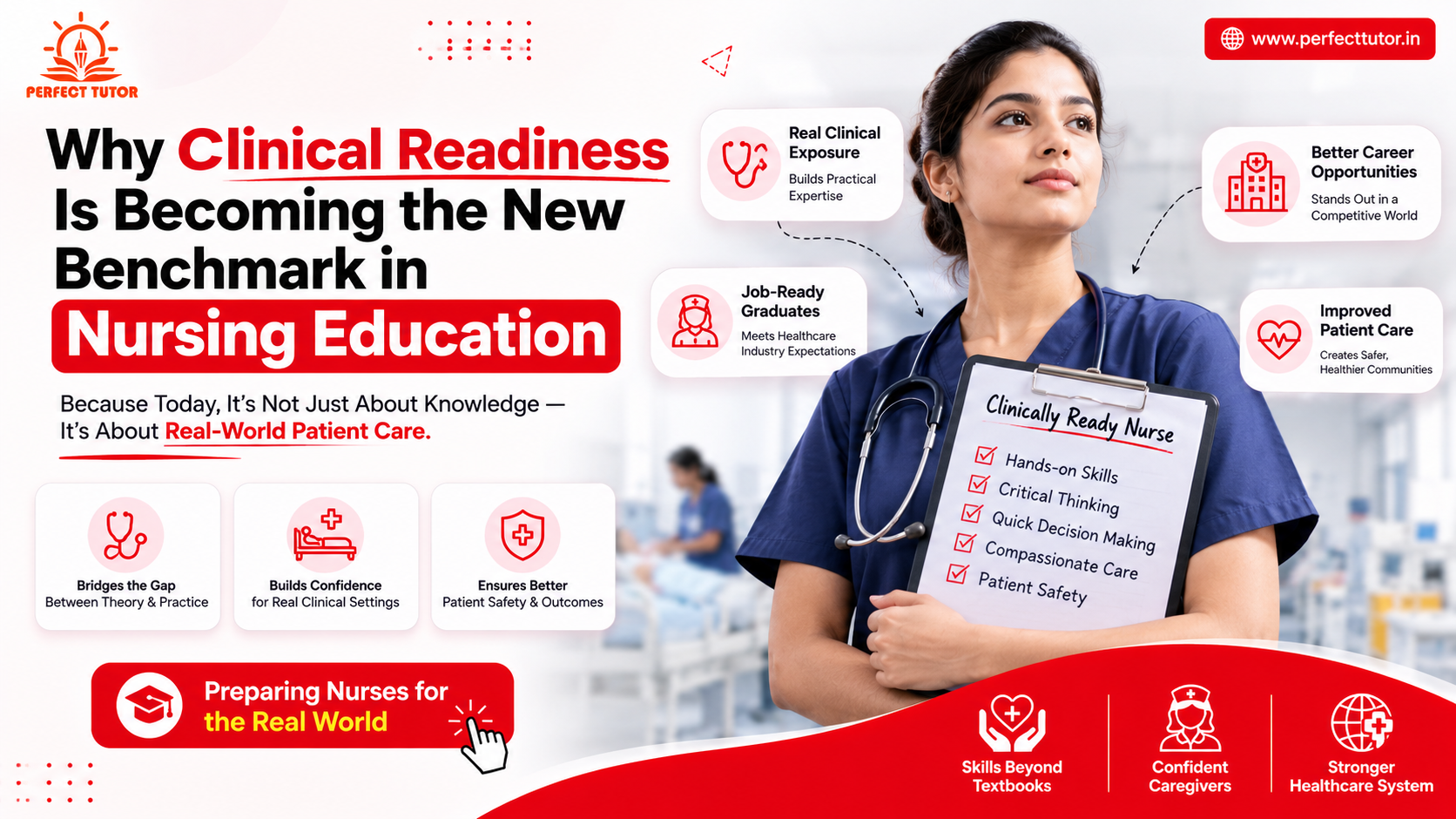
Why Clinical Readiness Is Becoming the New Benchmark in Nursing Education

A nursing degree was once considered as the benchmark for professional readiness. Increasingly, however, employers expect graduates to arrive with far more than academic knowledge. With hospitals becoming more specialized, patient volumes rising, and healthcare delivery becoming more technology-driven than ever before, healthcare systems are no longer evaluating graduates solely on theoretical knowledge but also on how effectively they can translate that learning into patient care from day one.
This shift is exposing a long-standing gap within education delivery. Most nursing programs continue to follow a classroom-first model, where theoretical learning occupies the majority of coursework while clinical exposure continues to remain concentrated towards the later years. While this approach builds academic foundation, however, it often leaves graduates spending their initial months in hospitals learning skills that employers increasingly expect them to possess before entering the workforce.
This new approach to nursing education is being shaped by the increasing demand for clinically prepared nurses. According to the World Health Organization, nurses account for nearly 30% of the global health workforce, making them the largest professional group in healthcare. Yet shortages continue to persist across countries. In India, a recent Hindustan Times report noted that the country has only 1.96 nurses per 1,000 population, below the WHO-recommended ratio of three nurses per 1,000 people. As healthcare infrastructure expands and specialized care becomes more common, institutions are under pressure to produce not only more nurses but also more capable nurses.
This reality is bringing a renewed approach to nursing education that combines academic learning with practical skill development and continuous clinical immersion. Increasingly, healthcare employers are asking a different question altogether. Looking beyond the number of graduates produced, healthcare institutions are increasingly focusing on how prepared graduates are for modern healthcare environments. This changing landscape is also influencing students’ evaluation of nursing courses after 12th. There is a growing demand for programs that offer early clinical exposure and workplace-relevant learning.
The Rise of Simulation-Based Training
The focus on clinical preparedness is reshaping the core of nursing education. Across the world, simulation-based learning and industry-integrated education are emerging as key approaches to developing job-ready healthcare professionals.
Research supports this shift. A meta-analysis published in Nurse Education Today in 2024 found that simulation-based education improves clinical decision-making among undergraduate nursing students. By allowing students to practise real-world scenarios in a safe, controlled environment, simulation-based learning helps build the confidence and judgement needed to navigate high-pressure situations in hospitals.
This reflects a broader shift in how nursing education is being designed, wherein, clinical confidence is achieved through repeated exposure, not deferred experience. This understanding is leading to a broader shift in favour of education models that incorporate simulation and workplace learning from the start. One of the models attracting attention is Emversity, an industry-skilling partner, which partners with universities to build industry integration into nursing courses. Advanced simulation infrastructure is created within partner institutions via its Centre of Future Skills initiative, with students training on advanced clinical manikins through VR and application-based environments. Students navigate more than 2,000 simulated hospital scenarios spanning emergency care, ICU operations, diagnostics, surgical assistance, ward management, and multidisciplinary patient care. They are also exposed to specialized domains, including critical care nursing, pediatrics, maternal healthcare, community health, and medical-surgical nursing.
Another area receiving increasing attention is competency validation. Emversity supports semester-wise industry-recognized certifications developed with organizations such as CAHO and Motherhood. These certifications are designed to align learning with employer expectations and strengthen career opportunities across domestic and international healthcare systems. Such approaches are reshaping expectations around BSc nursing courses, with increasing emphasis on continuous skill development, simulation-based learning, and industry-aligned training rather than classroom instruction alone.
Nursing Careers Are Becoming Increasingly Global
Nursing is emerging as an attractive career choice for students exploring medical courses after Class 12, driven by strong demand for qualified professionals in both India and overseas. Many countries across Europe, the Middle East, and Asia continue to face persistent nursing shortages, creating significant opportunities for skilled graduates. Germany, in particular, has become a preferred destination for Indian nursing professionals due to its ageing population and growing need for healthcare workers.
Building a nursing career in Germany requires more than clinical skills. Good German language skills and the ability to communicate in healthcare settings are equally important. To support this, nursing students can study Emversity’s Lanstitut German Language Program along with their studies. The pathway goes beyond language training. Emversity offers guided support that covers documentation, certification, visa processes, recognition pathways, and placement opportunities with German hospitals. This creates a structured pathway for nursing students to build healthcare careers in Germany.
As healthcare systems continue to evolve, clinical readiness is emerging as the defining benchmark for modern nursing courses. Degrees will continue to matter, but the institutions likely to shape the future are those that can ensure graduates enter hospitals not just qualified, but truly prepared.